Habiter le MAC – Second Cohort
Six emerging artists creating at the MAC at Place Ville Marie
The MAC is undergoing a transformation and embracing new ways of doing things. From February to October 2027, a second cohort of six emerging artists from throughout Québec is in residence at Place Ville Marie, making the Museum an inspiring place for creation and conversation. With ten years or less of professional experience, these artists reflect a diversity of artistic perspectives, with practices focused on exchange and interaction with the public.
The Artists of the Second Cohort
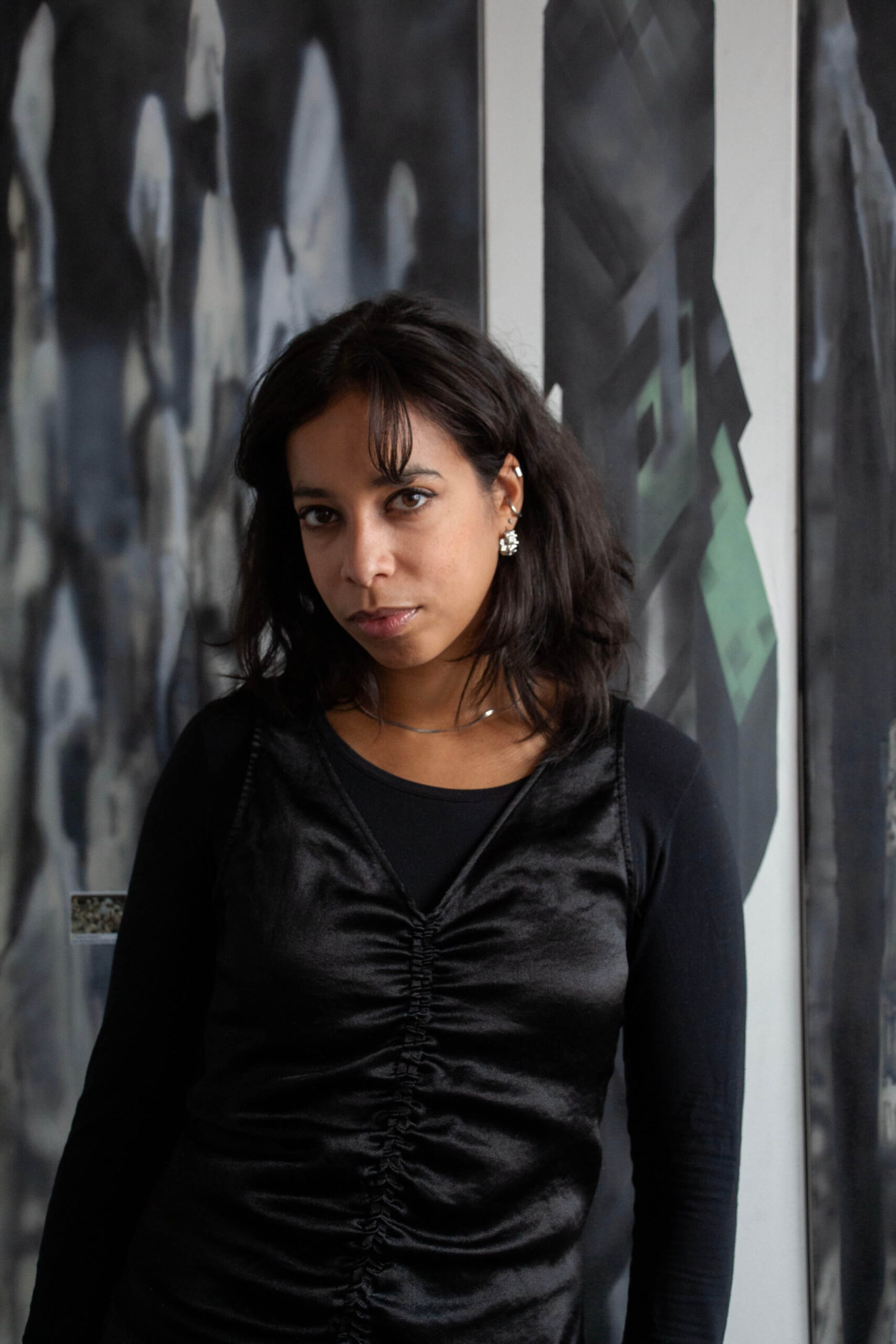
Credit: Cleo Sjolander
Caroline Douville
Caroline Douville is a multidisciplinary artist working in Montréal and Berlin. Her practice explores the ways images carry memory, history, and cultural knowledge across time. From a second-generation Haitian diaspora background, Douville engages with Afro-descendant histories and examines how colonial archives, popular imagery, and contemporary media shape cultural memory.
At the centre of her practice is an interest in the relationship between the visible and the unseen. Douville works extensively with images connected to Haiti, ritual, and the figure of the zombie. Rather than treating the photographic archive as a fixed record of the past, she reworks and reanimates these images through painting, image transfer, and material intervention. Her works occupy a space between document and fiction, memory and imagination, presence and absence, allowing archival images to become sites in which suppressed, fragmented, or unresolved histories can resurface.
Douville has exhibited internationally, including Kraupa-Tuskany Zeidler, Berlin (2026); Kunstverein Ulm (2026); Agent Troublant/Erratum projects off-site during art-o-rama, Marseille (2025); and Guerrero Gallery, Los Angeles (2024). She was a fellow at Akademie Schloss Solitude (2025–2026) and participated in the BPA// Berlin Program for Artists (2024–2026). Douville’s work and practice have been featured in publications including The Brooklyn Rail (2026) and Elephant Magazine (2024).
Source: Kristina Miller, Independent curator
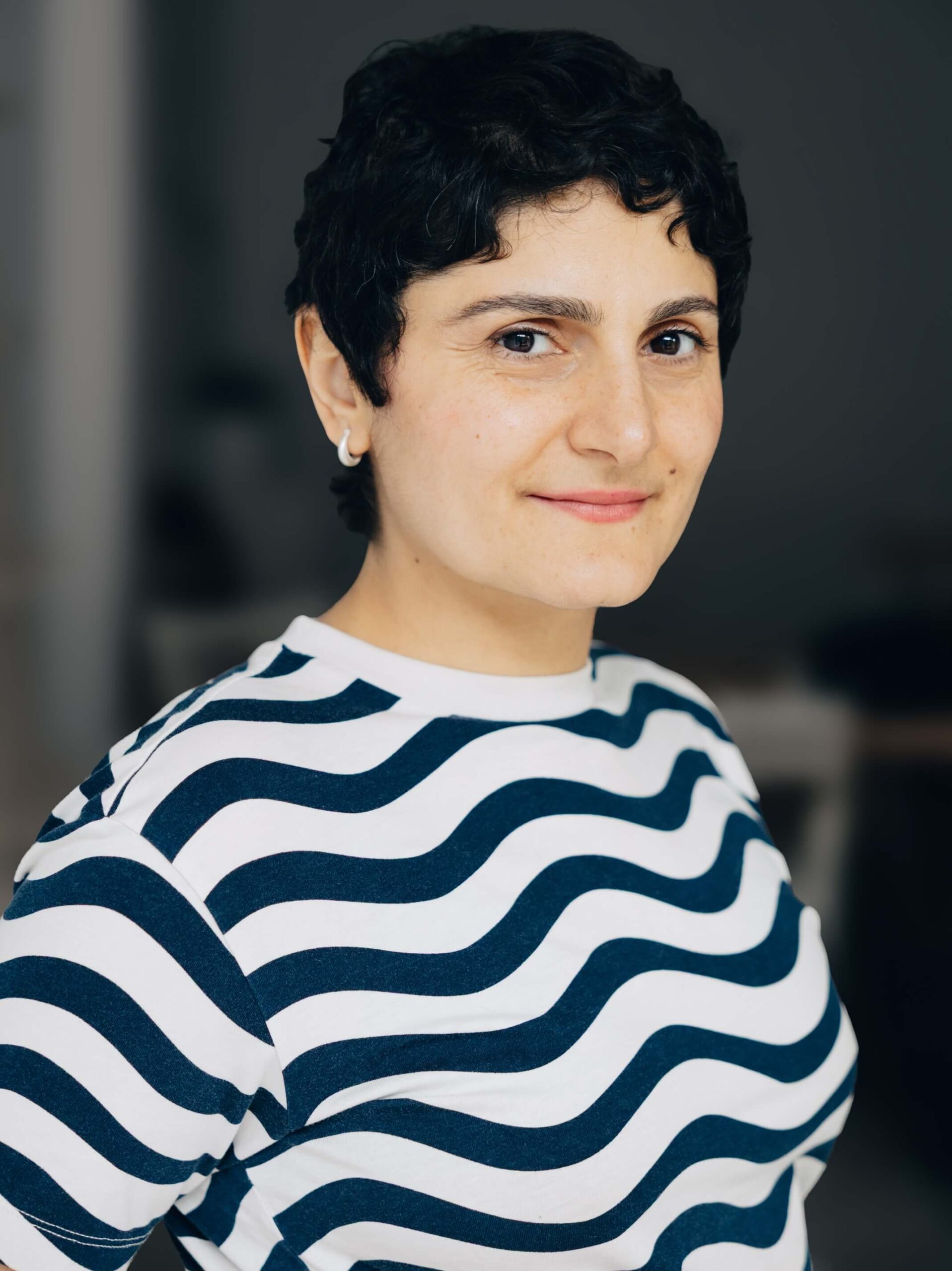
Credit: Charlotte Rainville
Diyar Mayil
Diyar Mayil is an artist working in sculpture, installation, and performance. She often works with the familiar to address issues of comfort, discomfort, and the blurring of public and private contexts. She was the 2022 laureate for the Bronfman Fellowship in Contemporary Art and is a recipient of the Liz Crockford Award (2023) and the Powerhouse Award (2026). Her work has been supported by the Canada Council for the Arts, the Conseil des arts et des lettres du Québec and the Conseil des arts de Montréal, and has recently been shown at Oakville Galleries, Whitney ISP, Articule, Circa Art Actuel, and Centre Clark. Upcoming commitments include residencies at Hospitalfield and Edinburgh Sculpture Workshop in Scotland. Her work has been written about in Cmag, Espace, Public Parking, Zero-Deux, La Presse, Le Devoir, and Vie des Arts. She holds a BFA and an MFA from Concordia University. Originally from Istanbul, she now lives and works in Tiohtià:ke/Montréal.
Source: Diyar Mayil
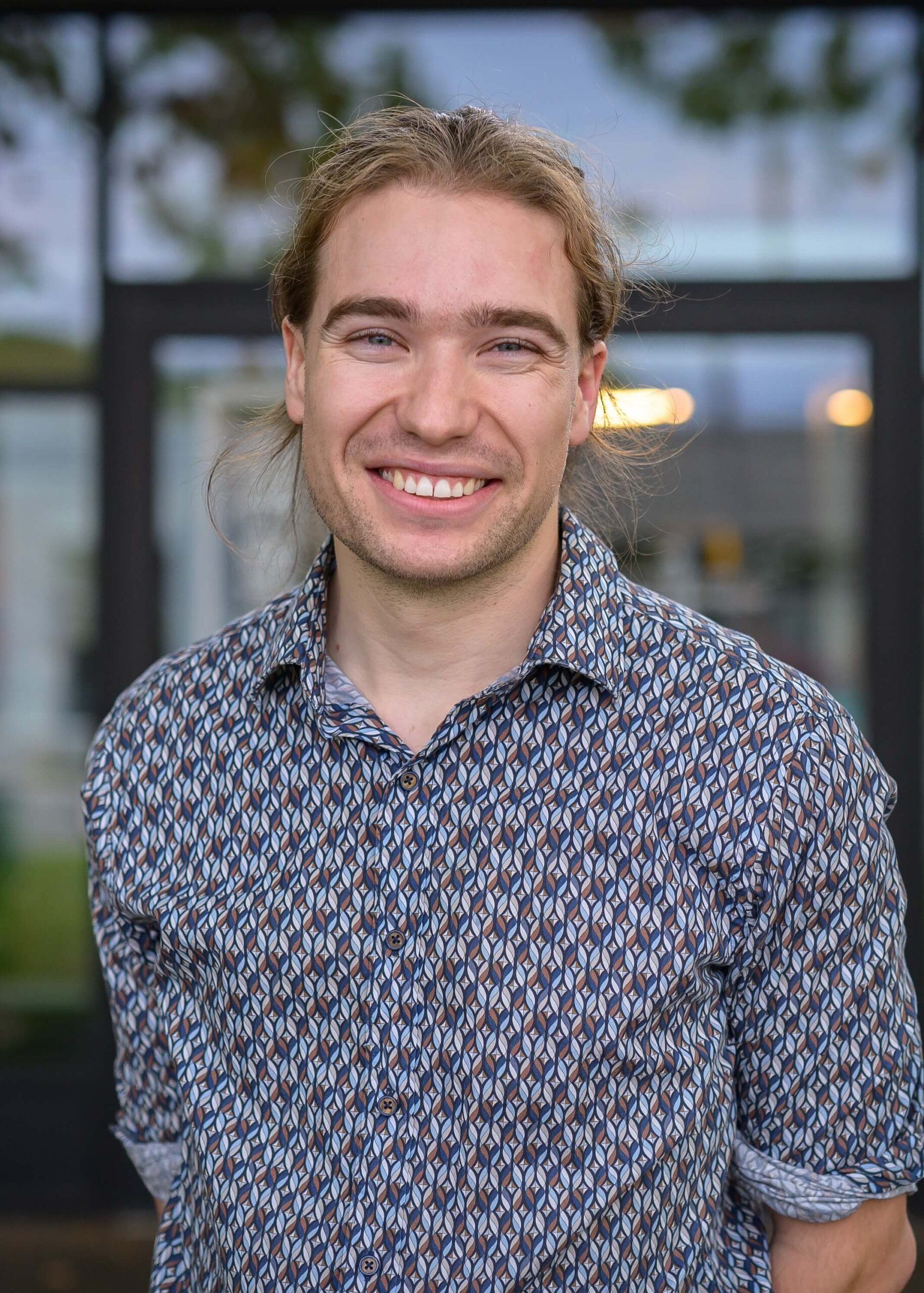
Credit: Éric Massicotte
Gabriel Mondor
Originally from Lanaudière and now based in Trois-Rivières, Gabriel Mondor holds two bachelor’s degrees in Visual Arts and New Media from the Université du Québec à Trois-Rivières (UQTR) and is currently pursuing a Master of Fine Arts at Concordia University.
His artistic approach stems from the idea that art is an experience rather than an object. This focus on immateriality leads him to develop relational projects in which oral transmission plays a central role. Through this orality, he is interested in the emergence of subjective narratives that are then contextualized into installations/situations addressing intersubjectivity and the experience of otherness.
Since 2023, his work has been presented in seven solo exhibitions across Québec, and he has taken part in numerous international group exhibitions across North America, Europe, and Asia. His latest projects have garnered him several awards and grants, recently including the Stelio Sole Award (2025). His works are held in many public and private collections, including Harvard University, the Douro Museum (Portugal), Villa Arson (France), BAnQ, the Desjardins Collection, and the City of Joliette.
Source: Gabriel Mondor
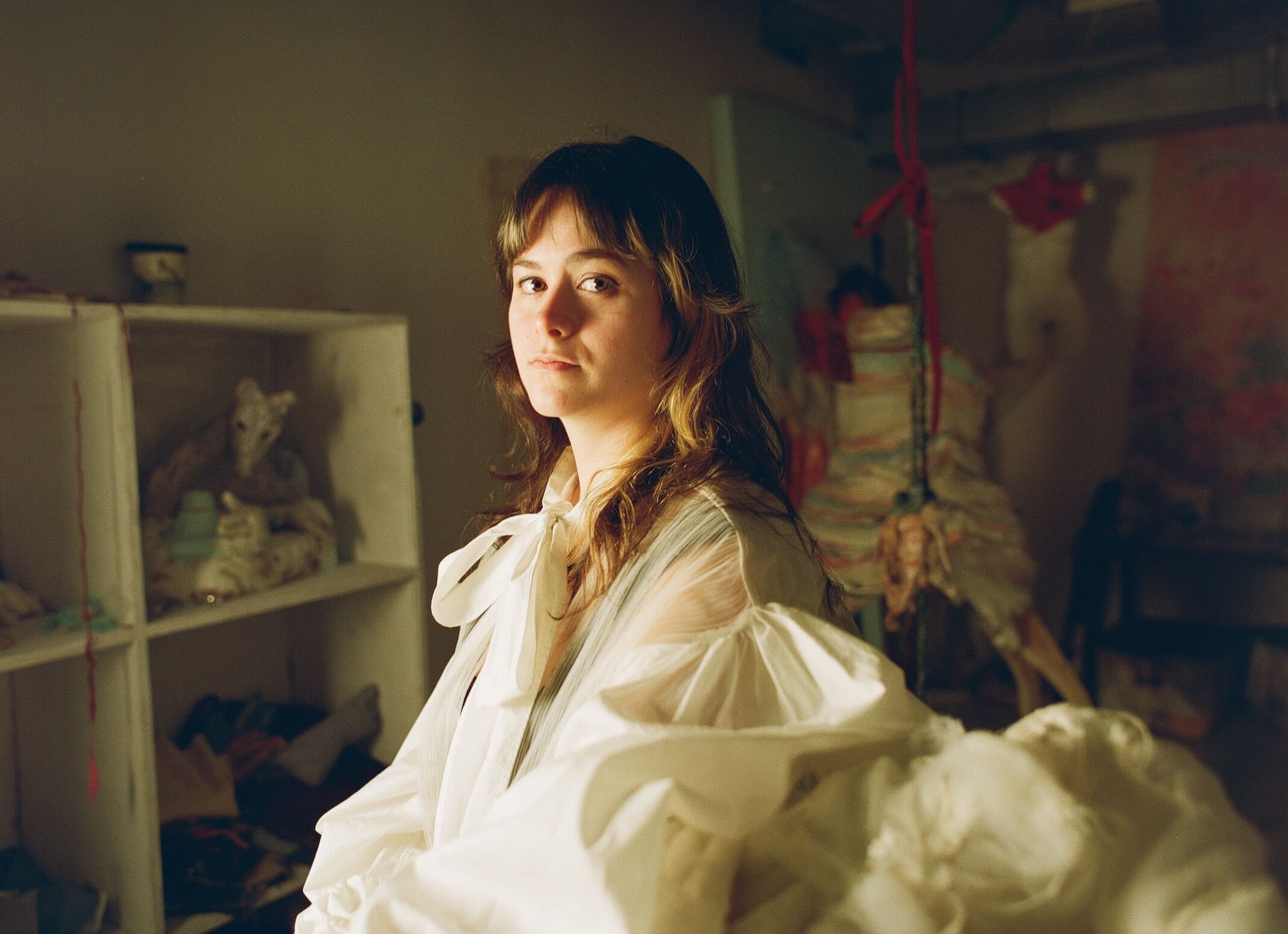
Credit: Berirouche Feddal
Elisabeth Perrault
Born in Joliette, Elisabeth Perrault lives and works in Montréal. She is represented by Pangée, where she has presented three solo exhibitions: Ces petites morts domestiques (2021), Danser avec nos fantômes (2023), and Nature pointue (2025). In 2024, she presented Les mascarades at Maison de la culture Maisonneuve, as well as a two-person exhibition at Carvalho Park in Brooklyn. In 2025, her work was also presented at The Armory Show in New York by Carvalho, at Pangée in a two-person exhibition with Marion Wagschal, and at the artist-run centre CIRCA, where she presented a solo exhibition. She notably collaborated with artist Patrick Watson on the music video for his song Better in the Shade in 2022. Perrault’s work is also part of art historian Dr. Julia Skelly’s research for her book, Threads: Cloth in Contemporary Queer, Feminist and Anti-racist Art, published by Bloomsbury Academic in 2025. Her work is held in the collections of the Musée d’art contemporain de Montréal, the National Gallery of Canada, the Musée d’art contemporain de Baie-Saint-Paul, the Desjardins Collection, and the Caisse de dépôt et placement du Québec. She is currently pursuing a master’s degree in Visual Arts at Concordia University, which she plans to complete in January 2027 with a solo exhibition at Pangée.
Source: Pangée
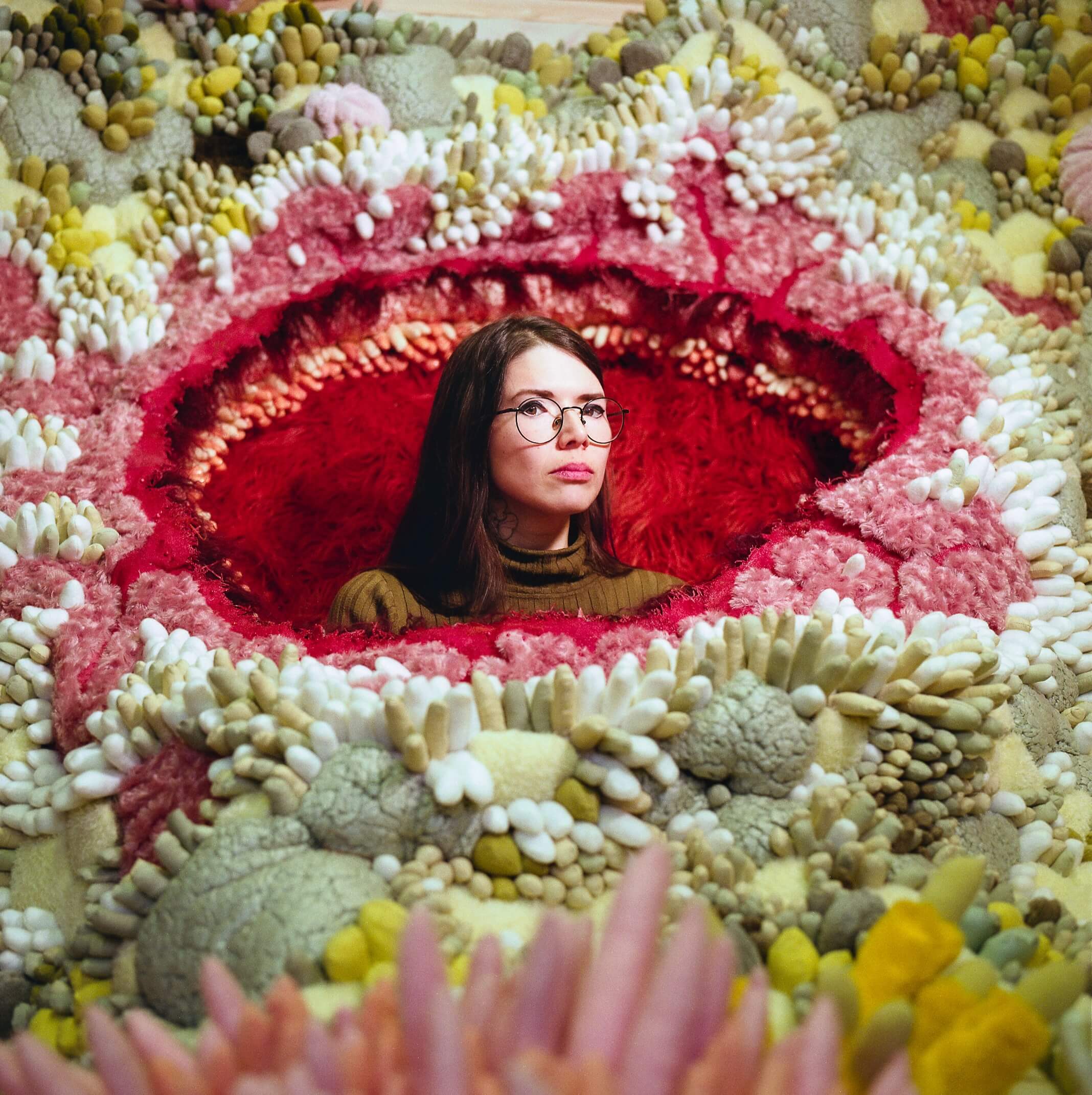
Credit: Mathieu Chouinard
Emy G. St-Laurent
Originally from Baie-Comeau on the Côte-Nord / Nitassinan, Emy G. St-Laurent (she/her) is an emerging visual artist. Her practice bears witness to a profound sense of wonder at the exuberant forms of living matter, omnipresent yet sometimes concealed behind dizzying orders of magnitude that she seeks to bring together. Through a cellular approach to textile sculpture, she composes biomorphic forms and immersive installations, creating pictorial propositions that blend this chimerical ecosystem with reality.
She holds a bachelor’s degree in Painting and Drawing from Concordia University (2013) and a master’s in Visual Arts from the Université du Québec à Chicoutimi (2024). She has lived and worked in Saguenay since 2021. Her work has been presented at various exhibition venues and artist-run centres across Québec, including Lobe and centre Bang (Chicoutimi), Espace partagé (Jonquière), Langage Plus and Sagamie (Alma), Panache art actuel (Côte-Nord), les ateliers du RAB (Québec), Fondation Grantham pour l’art et l’environnement (Centre-du-Québec), AdMare (Îles-de-la-Madeleine), centre d’exposition de Val-David (Laurentides), and Centre d’exposition Raymond-Lasnier (Trois-Rivières), where an exhibition is scheduled for 2027.
Source: Emy G. St-Laurent
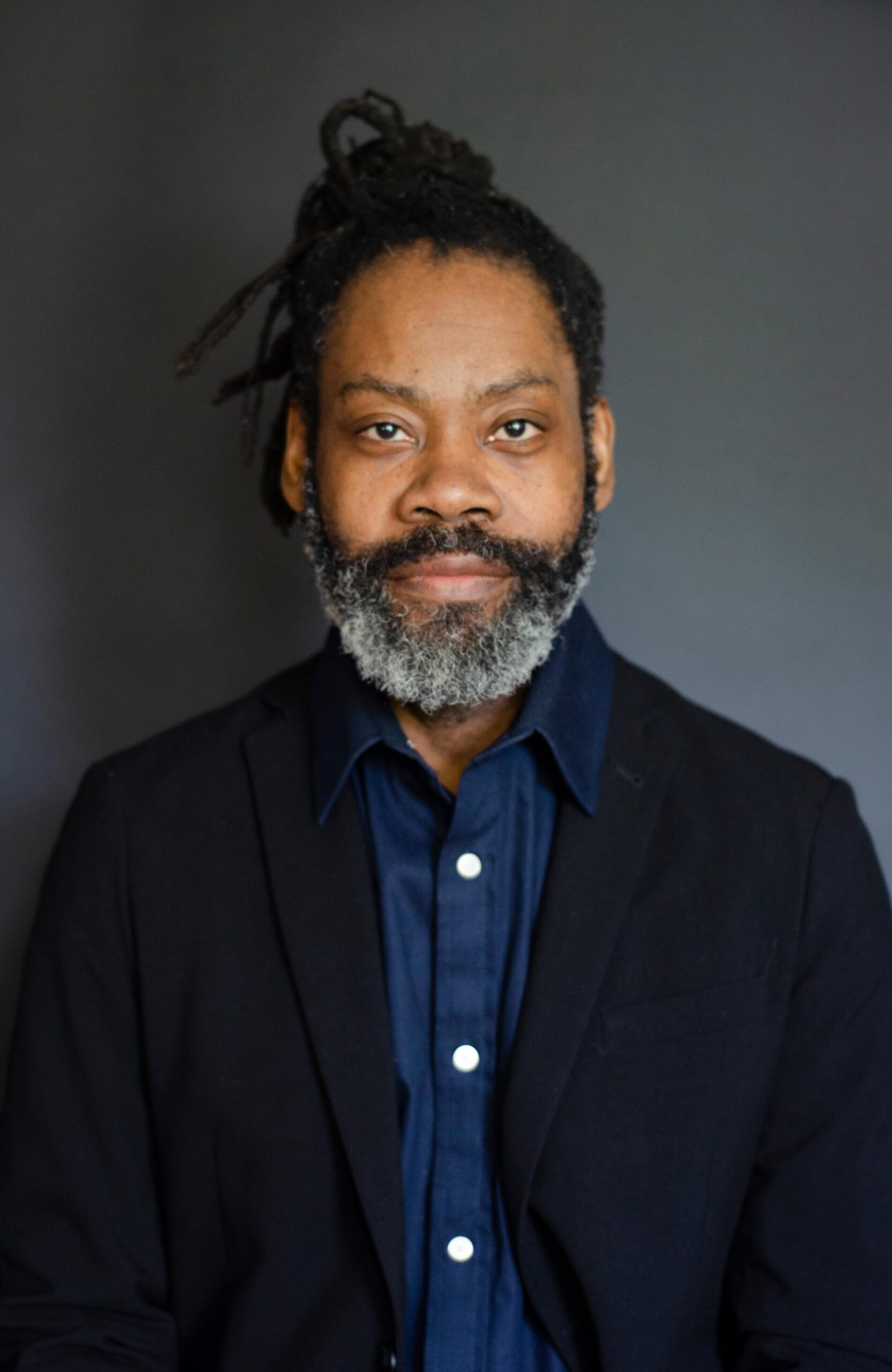
Credit: Carl-Philippe Simonise
Stanley Wany
Stanley Wany is a multidisciplinary artist whose work seeks to unearth the history of his Afro-descendant ancestors by revisiting narratives constructed by colonial archives. His practice began with an exploration—as a publisher and creator of experimental graphic novels—of non-linear storytelling and the representation of the unconscious. Following a residency in Finland, his interest in the historicity of popular culture narratives led to the creation of works on paper. Subsequently, alongside his first exhibition at the Ottawa Art Gallery, he pursued a master’s degree in visual and media arts at UQAM. Centring his research on the recollection of family trauma, he traces the impact of colonial subjugation on his own identity. Currently, his practice focuses on the contributions of his family and, more broadly, African cultures, aiming to forge a narrative that highlights the legacies and contributions of Afro-descendant people to history and culture. These elements are encoded in works utilizing materials associated with colonialism—such as coffee, cotton, and sugar—which also serve as an interface between the artist and the public, fostering dialogue.
Mentor: Valérie Blass
To support them, the MAC is pleased to entrust the role of mentor to Valérie Blass, a Montréal artist whose practice, rooted in studio experimentation, resonates with the spirit of the program.
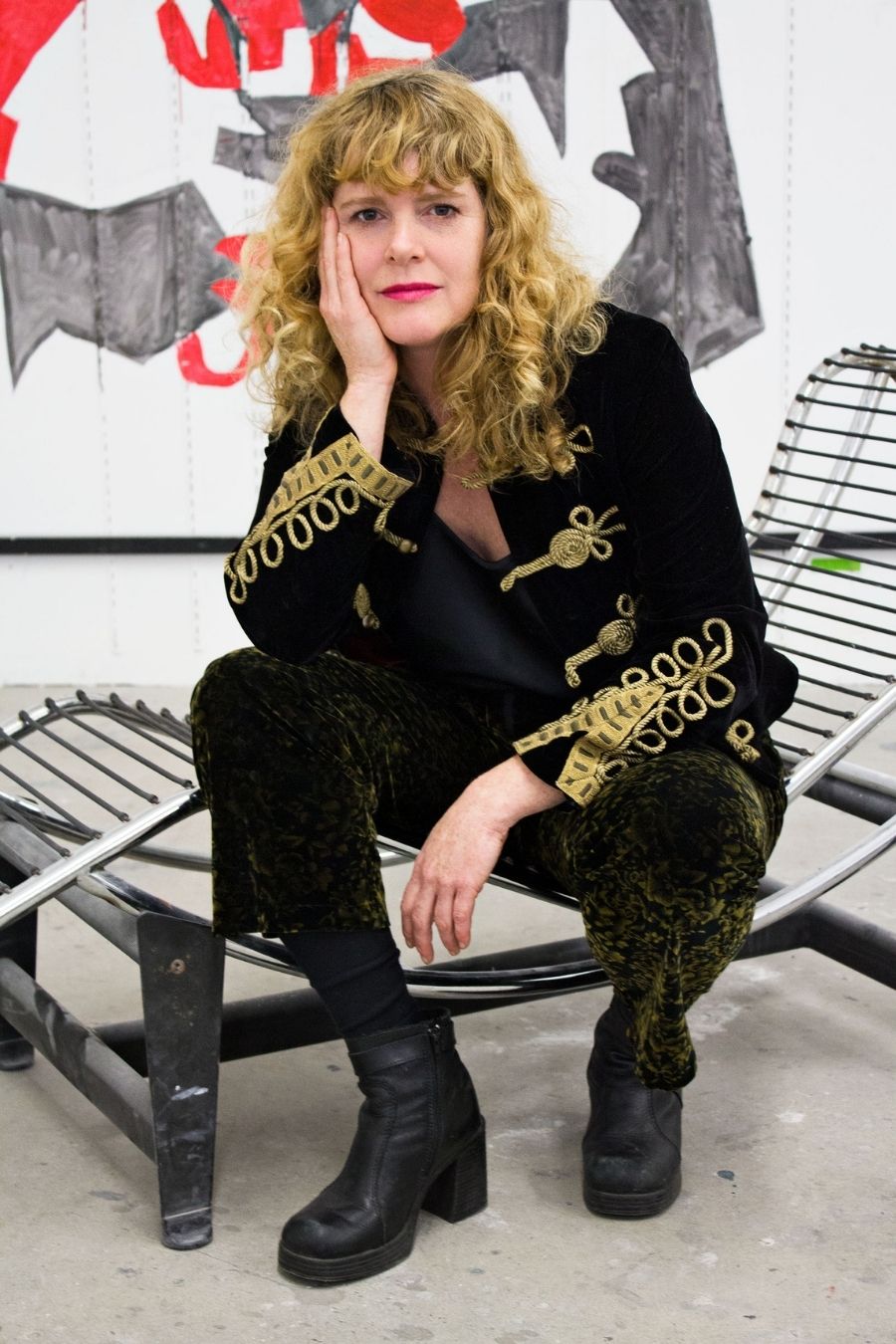
Credit: Maryse Larivière
Valérie Blass is a Canadian sculptor who lives and works in Montréal.
Her practice is grounded in a reflection on the formal language of sculpture, interwoven with an inquiry into the possible translations between the human, the animal, and the thing. Her sculptures confound our perception of reality, weight, and volume by layering strange details over an underlying logic, producing new understandings, and confusions, of our material and cultural world. By drawing the viewer’s eye to details that may seem incidental, she creates absurd pairings between things that are usually incompatible. In this fertile ambiguity, where discordant references and entities coexist, the possible interpretations of the work multiply, overlapping simultaneously within a single visual space.
Valérie Blass studied at the Université du Québec à Montréal, earning a BFA in 1998 and an MFA in 2006. Her notable solo exhibitions include Fonderie Darling, Montréal (2023); Catriona Jeffries, Vancouver (2024, 2020, 2015); the Art Gallery of Ontario, Toronto (2019); Oakville Galleries (2019); Artspeak, Vancouver (2015); the Illingworth Kerr Gallery, Calgary (2013); the Musée d’art contemporain de Montréal (2012); and MOCA Toronto (2009). Her work has been included in numerous group exhibitions, among them MOMENTA Biennale de l’image, Montréal (2023); Musée Zadkine, Paris (2021); the Berkeley Art Museum and Pacific Film Archive, University of California (2021); Centre d’art contemporain d’Ivry – le Crédac, France (2019); the National Gallery of Canada, Ottawa (2017, 2011); the Biennale de Montréal (2016); the Vancouver Art Gallery (2016); the Museum of Contemporary Art Cleveland (2016); the Musée national des beaux-arts du Québec (2016, 2011); the Montreal Museum of Fine Arts (2014, 2010); and the Public Art Fund, MetroTech Center, Brooklyn (2012). In 2017, she received the Gershon Iskowitz Prize.
Source: Valérie Blass
Habiter le MAC is a career development program that places emerging artists at the heart of the Museum during the preparation for the opening of the new MAC at Place des Arts. Offering a creative space, mentoring and professional guidance, the program gives significant space to emerging artists from across Québec and fosters creative encounters with the public.
Frequently Asked Questions
What does the program offer artists?
Habiter le MAC provides a workspace, financial compensation in line with industry standards, personalized support and access to a vast professional network. Each cohort includes two artists from outside Greater Montréal, whose housing and living expenses are covered by the Conseil des arts et des lettres du Québec (CALQ).
How were the artists selected?
The artists were selected by a jury made up of members of the Museum’s team and representatives of the academic community, cultural organizations and artist-run centres: artch, Caravansérail, Sagamie, Concordia University and the Université du Québec à Montréal.
How can I meet the artists?
Several opportunities to meet the public are planned during their time at the MAC. They will be announced over the coming months in the MAC at Place Ville Marie program. Subscribe to our newsletter through this form to be the first to know.
Acknowledgements
The program is made possible through the generous support of the Printemps du MAC. The MAC also thanks the Conseil des arts et des lettres du Québec (CALQ) for its decisive financial support, provided directly to the artists as part of a sustainable partnership supporting the vitality of Québec’s creative scene.